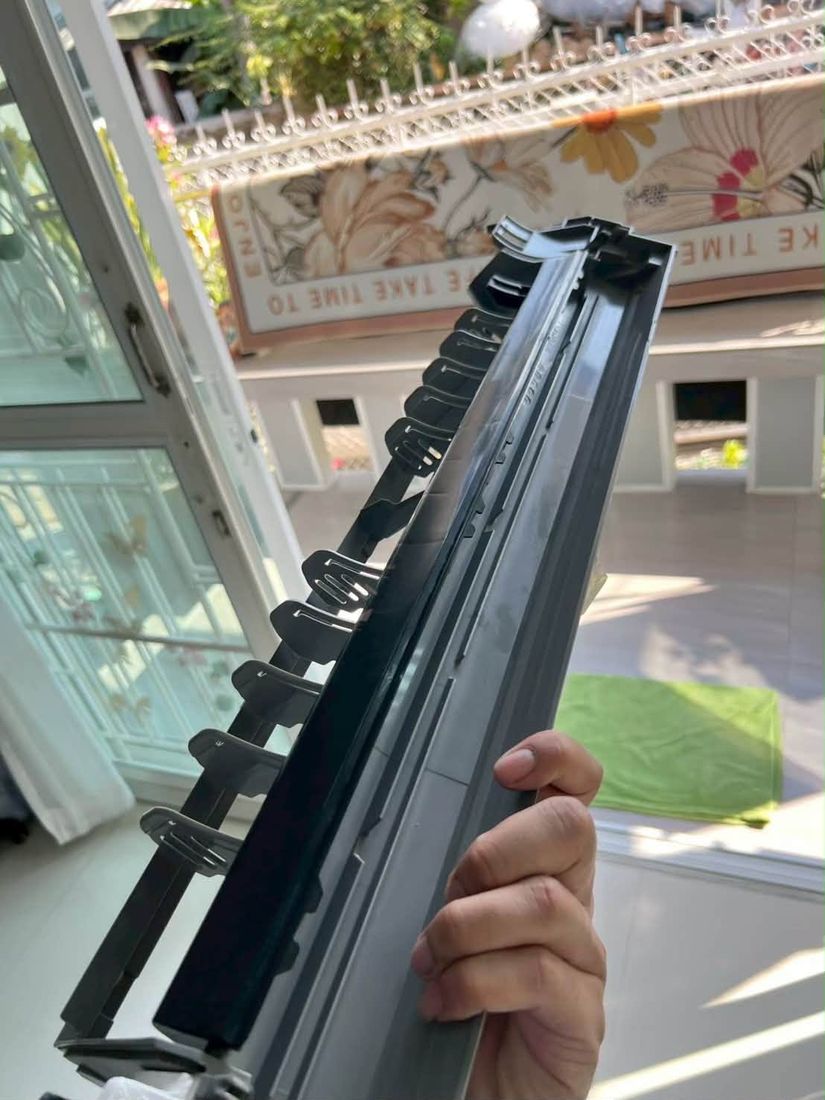
When an air conditioner starts making a strange noise, most owners ask two things at once: is it going to break, and how much will it cost. I understand the worry. A healthy unit has a steady background sound, air moving through the vents and a fan motor turning quietly, and you stop noticing it after a while. Any new sound, loud or soft, means something in the system has changed.
The good news is that noise is a clear early warning. Almost every mechanical part makes an abnormal sound before it actually fails. If you identify the sound correctly and deal with it at that stage, the cost is a fraction of waiting until the part stops. Below I go through the main sounds one by one and where each comes from.
First, work out whether the sound is inside or outside
The first step cuts the possibilities in half straight away: is the sound coming from the indoor unit in the room, or from the outdoor unit outside the house? The two have different parts and different problems.
- Sounds from the indoor unit involve the blower wheel, the fan motor, the swing louvres, the plastic housing, and refrigerant flowing through the valve.
- Sounds from the outdoor unit involve the compressor, the condenser fan, the mounting bracket, and copper pipes vibrating against something.
- If you are not sure, run the aircon and listen under the indoor unit for a moment, then go and listen near the outdoor unit, and compare which one gets louder as you get closer.
Cause 1: dust on the blower wheel has thrown it off balance
In my own jobs this is the most common cause of a rattling, vibrating noise, and also the easiest to fix. The blower wheel inside the indoor unit spins fast and is balanced evenly around its shaft. When damp dust builds up unevenly in the grooves between the blades, the centre of gravity shifts and the whole wheel vibrates on every turn.
- The sound: a rattle or a low hum that shakes the whole unit, usually louder when you turn the fan speed up.
- What often comes with it: weaker airflow and less cooling, because of the same dirt.
- The fix: a clean. If the dirt is packed so tightly into the blades that a standard clean cannot reach it, the blower wheel has to come out and be washed separately.
In Chiang Mai this becomes noticeably more common after the burning season. Soot from agricultural burning sticks to a damp blower wheel far more firmly than ordinary dry dust, so homes that went through the smoky months without a clean often start hearing this sound around the middle of the year.
Cause 2: worn fan motor bearings
The fan motors in both the indoor and outdoor units turn on bearings, and bearings wear out. When the lubricant inside dries or the balls wear down, you get a high-pitched grinding sound.
- The sound: a continuous high whistle, or a metal-on-metal scraping, the whole time the fan is running.
- How to tell it apart: the sound is steady rather than rhythmic, and it does not go away after a clean.
- The fix: replace the motor. The price depends on the model and the part used, and I give you the full price before I start.
Cause 3: loose screws and plastic parts knocking together
Years of vibration can loosen screws on their own, especially where the unit is fixed to the mounting plate on the wall. Once a fixing is loose, the plastic housing shifts and knocks every time the motor starts or stops.
- The sound: a rhythmic clicking or clacking, usually when the unit switches on and when it switches off.
- A variation: a single set of clicks that then stops, often from a cover or louvre that has not clipped in properly.
- The fix: tighten the screws and check the mounting plate is level. It is simple work and usually done in one visit.
I see this a lot in the older wooden houses that Chiang Mai has plenty of. Wooden walls swell and shrink with the humidity each season, so screws in wood loosen more easily than screws in concrete, and the wooden wall itself acts like a sounding board that makes the vibration louder.
Cause 4: the compressor is starting to have problems
The compressor is the heart of the system and the most expensive part, so compressor noise is the kind I take most seriously. A healthy compressor makes a low, steady hum. If the sound changes from that, have a technician check it.
- A metallic knocking from inside usually means internal parts are wearing.
- The whole outdoor unit shaking unusually hard may come from rubber mounting feet that have hardened or cracked, which is simple and inexpensive to fix.
- A loud hum while the compressor does not start is usually a failing capacitor, not a failed compressor. I stress this because the cost of the two is very different.
- The fix: take real readings to tell whether the problem is the capacitor, the rubber mounts or the compressor itself.
Cause 5: water and refrigerant sounds in the system
These are the hardest for owners to judge, because some of them are completely normal while others mean the system is low on refrigerant.
- A soft trickling sound when the unit starts or stops is refrigerant moving through the pipes. That is normal and needs no fix.
- A continuous hiss like escaping air, or a louder bubbling than usual, may mean the refrigerant is low enough to form bubbles in the pipe. Have the pressure measured.
- A sloshing or bubbling sound from under the indoor unit usually comes from water sitting in the drain tray because the drain line is starting to block.
- A single click from the copper pipes happens when a pipe expands with temperature and knocks against the wall or a clamp. Re-routing the pipe and adding rubber padding fixes it.
Cause 6: problems from the installation
This group has an easy tell: the noise has been there since the day the unit was installed, or started right after it was moved, rather than creeping in with age. If that matches your situation, there is no need to hunt for a failed part. Check the installation first.
- The mounting plate for the indoor unit does not sit flat against the wall, leaving a gap to vibrate and knock in.
- The outdoor unit bracket is not fixed firmly enough to the wall, or has no anti-vibration rubber, so vibration travels into the house.
- Copper pipes run too close to the wall or to a steel frame and knock against it as they expand.
- The outdoor unit sits on an uneven surface and rocks while the compressor runs.
- What you hearRattling that shakes the unit, with weaker airflow
- Likely cause
- Dust has unbalanced the blower wheel
- Urgency
- Can wait, book a normal clean
- What you hearA continuous high whistle that a clean does not fix
- Likely cause
- Worn motor bearings
- Urgency
- Fix soon, before the winding burns out
- What you hearRhythmic clicking when it starts and stops
- Likely cause
- Loose screws or a cover not clipped in
- Urgency
- Can wait
- What you hearMetallic knocking from the outdoor unit
- Likely cause
- Internal compressor problem
- Urgency
- Urgent: stop using it and call a technician
- What you hearLoud hum but the compressor does not start
- Likely cause
- Failing capacitor
- Urgency
- Urgent: do not keep resetting the breaker
- What you hearContinuous hiss like escaping air
- Likely cause
- Low refrigerant, possibly a leak
- Urgency
- Fix soon
- What you hearSoft trickling when it starts and stops
- Likely cause
- Refrigerant moving in the pipes, normal
- Urgency
- No fix needed
- What you hearVibration into the wall since installation day
- Likely cause
- Installation: bracket or rubber mounts
- Urgency
- Can wait, but worth fixing properly
| What you hear | Likely cause | Urgency |
|---|---|---|
| Rattling that shakes the unit, with weaker airflow | Dust has unbalanced the blower wheel | Can wait, book a normal clean |
| A continuous high whistle that a clean does not fix | Worn motor bearings | Fix soon, before the winding burns out |
| Rhythmic clicking when it starts and stops | Loose screws or a cover not clipped in | Can wait |
| Metallic knocking from the outdoor unit | Internal compressor problem | Urgent: stop using it and call a technician |
| Loud hum but the compressor does not start | Failing capacitor | Urgent: do not keep resetting the breaker |
| Continuous hiss like escaping air | Low refrigerant, possibly a leak | Fix soon |
| Soft trickling when it starts and stops | Refrigerant moving in the pipes, normal | No fix needed |
| Vibration into the wall since installation day | Installation: bracket or rubber mounts | Can wait, but worth fixing properly |
When to switch it off straight away
Most abnormal sounds can wait. But in a few cases, running the unit for one more night can multiply the repair bill. Remember these four.
- 1A burning smell or the smell of hot plastic together with the noise: switch off the breaker immediately.
- 2Metallic knocking from the outdoor unit means an internal part is damaged and doing more damage as it runs.
- 3A hum followed by the breaker tripping: do not keep switching it back on to test it.
- 4A strange noise together with no cooling and ice on the pipes: switch off cooling mode and run fan mode until the ice melts first.
For jobs that need diagnosing, I charge 500 THB to check the unit, and I take that off the repair bill if you go ahead with me. Parts such as a motor, a capacitor or anything else depend on the model and the part used, and I give you the full price before I start. If I find something extra on site, I tell you and ask before doing it. Where a clean solves the problem, I tell you honestly that no part needs replacing. Repairs carry a 30-day warranty.
If your aircon is making a strange noise, record a clip and tell me whether it happens when the unit starts or while it is running, then send it on LINE. I will help you judge how urgent it is and what should be checked.