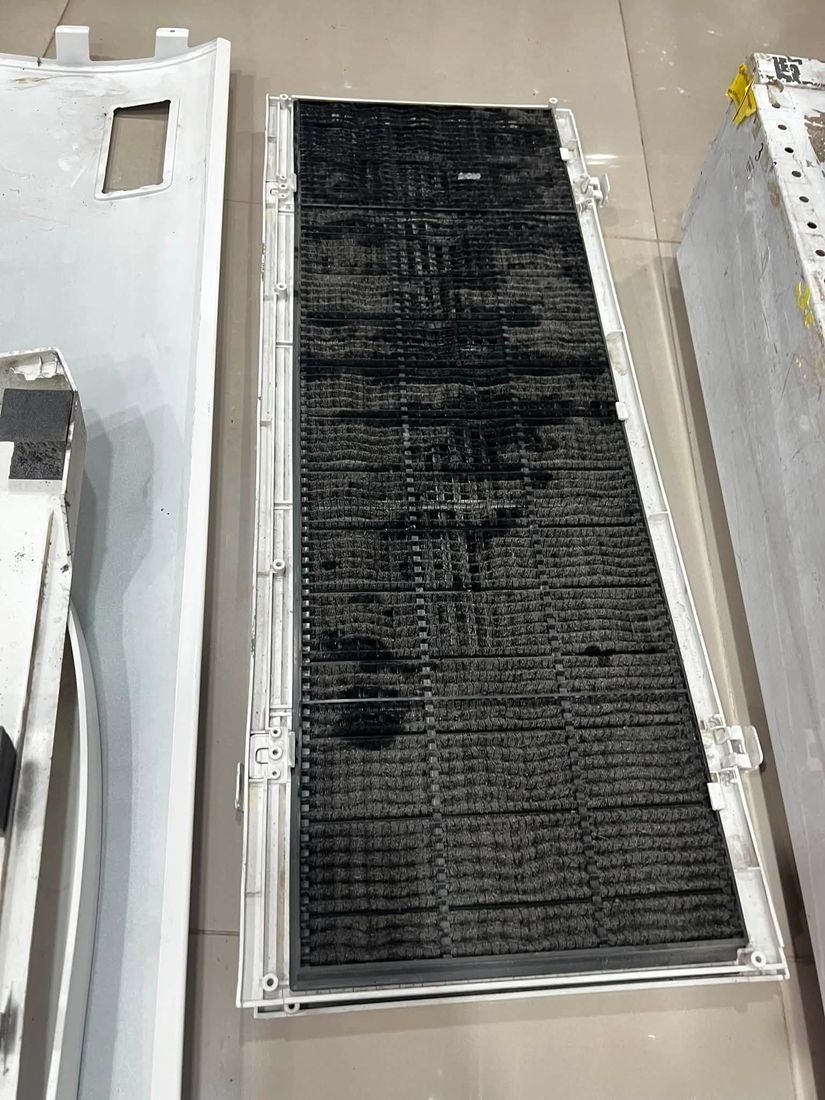
When the hot-season electricity bill arrives, every year I am asked whether the family has been running the aircon for longer. Many homes use it exactly as before, yet the figure is clearly higher. I understand that this uncertainty makes it hard to decide what to do. The real explanation comes down to one factor: the compressor is running for longer each hour, and there are three or four things that make it run longer without you noticing.
I have put them in order of value for money, starting with what you can do straight away at no cost and ending with what needs some investment, so you can choose only the steps that really work for your home.
Which part of an aircon uses the most power
An aircon system has three motors: the indoor coil fan in the room, the outdoor unit fan, and the compressor. By far the biggest user of power is the compressor; the two fans use very little in comparison.
Put simply, your aircon's electricity cost equals the total time the compressor runs each month, not the time you have the aircon switched on. If the compressor cuts out quickly and often, the bill is low. But if it runs continuously without cutting out, the bill is high even though you use the aircon for the same hours as before.
What temperature setting actually saves power
The Provincial Electricity Authority (PEA) recommends setting the aircon at 26–27 °C, a level that is comfortable without being too cold. Technically, the lower you set it, the wider the gap between your setting and the air outside, so the compressor has to run longer to reach the target, and once it gets there it is harder to hold that level.
Most people who set 22 or 23 degrees do not actually want air at 22 degrees; they want the room to cool down faster. This is one of the misunderstandings I come across most often, because an aircon does not work like a tap. Setting 18 degrees does not cool the room faster. It only stops the compressor cutting out until the room reaches 18 degrees, which most homes never do.
- Setting18–22 °C
- What happens to the compressor
- Runs continuously and hardly ever cuts out; in a poorly insulated room it may never reach the setting
- How the room feels
- Very cold, but the highest bill, and you often wake up needing a thick blanket
- Setting23–25 °C
- What happens to the compressor
- Cuts out sometimes, but the running cycles are still long
- How the room feels
- Clearly cool and comfortable; bill moderate to high
- Setting26–27 °C
- What happens to the compressor
- Cuts out in regular cycles; running cycles get shorter
- How the room feels
- The range PEA recommends; comfortable enough with some airflow
- Setting29 °C and above
- What happens to the compressor
- Cuts out very often and runs little
- How the room feels
- Many people start to feel it is stuffy and rely more on a fan
| Setting | What happens to the compressor | How the room feels |
|---|---|---|
| 18–22 °C | Runs continuously and hardly ever cuts out; in a poorly insulated room it may never reach the setting | Very cold, but the highest bill, and you often wake up needing a thick blanket |
| 23–25 °C | Cuts out sometimes, but the running cycles are still long | Clearly cool and comfortable; bill moderate to high |
| 26–27 °C | Cuts out in regular cycles; running cycles get shorter | The range PEA recommends; comfortable enough with some airflow |
| 29 °C and above | Cuts out very often and runs little | Many people start to feel it is stuffy and rely more on a fan |
A fan is the cheapest way to cut the bill
A fan does not make the air cooler, but it makes sweat evaporate from your skin faster, so your body feels cooler than the actual air temperature. That is why a room at 27 degrees with air moving through it feels about as cool as a room at 25–26 degrees where the air is still, because PEA says moving air makes you feel about 1–2 degrees cooler than the actual temperature.
- Set the aircon at 26–27 degrees and run a fan gently so the air moves over you, and it feels about as cool as a setting around 1–2 degrees lower.
- A fan uses far less power than the compressor, so adding a fan to take load off the compressor always pays.
- Position the fan so the air circulates around the whole room rather than only pointing it at yourself; it also helps spread the cool air from the aircon evenly.
- If you have a ceiling fan, it works very well with the aircon, because it helps push the cool air that settles at the bottom of the room back into circulation.
- Switch the fan off when nobody is in the room, because a fan helps how people feel; it does not lower the room temperature.
How dirty coils make an aircon use more power
Dirty coils are the main cause of a rising bill, and the most overlooked one, because it happens so gradually that you do not notice. An aircon has two coils that both need to be clean for it to work at full efficiency.
The indoor coil sits inside the room, and its job is to pull heat out of the air. If dust packs the coil fins, less air can flow through, so the aircon pulls heat out of the room more slowly. The room temperature falls slowly, and the compressor has to keep running without cutting out.
The outdoor coil sits outside, and its job is to release heat into the outside air. If its fins are clogged with dust or leaves, heat cannot get out fast enough and the pressure in the system rises. The compressor then has to work harder to pump the same amount of refrigerant, so it uses more power straight away while giving the same or less cooling.
- SignWeaker airflow than before
- Likely cause
- Clogged filter or indoor coil
- What to do
- Wash the filter yourself first; if that does not help, the coil needs cleaning
- SignYou keep lowering the temperature to feel the same
- Likely cause
- Indoor coil gradually clogging
- What to do
- It is time for a thorough clean
- SignThe compressor almost never cuts out
- Likely cause
- Temperature set too low, or a clogged coil
- What to do
- Raise it to 26 degrees first; if it still does not cut out, have a technician check
- SignCool at night but not during the day
- Likely cause
- The outdoor coil cannot release heat fast enough
- What to do
- Clean the outdoor coil and check whether anything is blocking the airflow
- SignThe aircon cuts out unusually often, then restarts by itself
- Likely cause
- Outdoor coil so clogged the unit is protecting itself
- What to do
- Have a technician check; do not leave it for long
| Sign | Likely cause | What to do |
|---|---|---|
| Weaker airflow than before | Clogged filter or indoor coil | Wash the filter yourself first; if that does not help, the coil needs cleaning |
| You keep lowering the temperature to feel the same | Indoor coil gradually clogging | It is time for a thorough clean |
| The compressor almost never cuts out | Temperature set too low, or a clogged coil | Raise it to 26 degrees first; if it still does not cut out, have a technician check |
| Cool at night but not during the day | The outdoor coil cannot release heat fast enough | Clean the outdoor coil and check whether anything is blocking the airflow |
| The aircon cuts out unusually often, then restarts by itself | Outdoor coil so clogged the unit is protecting itself | Have a technician check; do not leave it for long |
You can check this mechanism yourself. A clean coil lets the compressor run for less time each cycle, so the bill goes down too. What I want to stress is that this comes from a clean that gets both the indoor and outdoor coils truly clean; taking out the filter and washing it alone does not give results on this scale. If you want to see the figures for your own home, note the meter reading before the clean and one week after, at the same time of day.
Does switching off when you leave the room save power?
This is one of the questions I get most often. The answer depends on two things: how long you will be out of the room, and whether your aircon is an inverter model.
A standard aircon only works fully on or fully off. An inverter aircon can vary its compressor speed: once it reaches the target temperature it slows down and idles to hold that temperature, which uses far less power than starting to cool a room that has already heated up.
- Time out of the roomUnder half an hour, e.g. popping downstairs
- Standard aircon
- Leave it on
- Inverter aircon
- Leave it on
- Time out of the roomHalf an hour to an hour
- Standard aircon
- Can switch off if the room holds the cool well
- Inverter aircon
- Leaving it on is usually better value
- Time out of the roomMore than one to two hours
- Standard aircon
- Switch off
- Inverter aircon
- Switch off
- Time out of the roomOut at work all day
- Standard aircon
- Definitely switch off
- Inverter aircon
- Definitely switch off
| Time out of the room | Standard aircon | Inverter aircon |
|---|---|---|
| Under half an hour, e.g. popping downstairs | Leave it on | Leave it on |
| Half an hour to an hour | Can switch off if the room holds the cool well | Leaving it on is usually better value |
| More than one to two hours | Switch off | Switch off |
| Out at work all day | Definitely switch off | Definitely switch off |
Switching off and back on every half hour does not pay because the heaviest power use is when the aircon pulls a room that has heated up back down to the target, not when it is holding the temperature. Switching off too often forces the aircon through that heavy-use phase again and again.
How to read the No. 5 label and the SEER rating
If you are about to buy a new unit, the figure to look at is not just "No. 5" (Thailand's top energy-saving label grade), because the current label also carries stars. The more stars, the more efficient the unit is, even among No. 5 models.
SEER is the seasonal energy efficiency rating. Put simply, it is the cooling you get for the electricity you use, taking into account both the times the unit works hard and the times it works lightly. The higher the SEER, the less power it uses compared with a unit of the same BTU size.
- Comparing SEER only means something between aircons of a similar BTU size; comparing across sizes gives you nothing useful.
- The label also shows an estimated yearly electricity cost, which I think is an easier way to compare models than looking at SEER directly.
- A high SEER usually comes with a higher unit price. Think about how many hours a day you run the aircon: if it runs all night every night, the difference pays for itself, but if you only use it now and then, it may not be worth it.
- An energy-saving unit installed at the wrong size or never cleaned can use more power than a standard unit that is looked after regularly.
A checklist to start cutting your bill today
- 1
Raise the remote setting to 26 degrees
You can do this straight away at no cost. If it does not feel cool enough, add a fan first rather than lowering the temperature again.
- 2
Take out the filters and wash them
It takes about ten minutes. Wash them with plain water and let them dry completely before putting them back. You can do this yourself every 2 weeks as manufacturers recommend, and no longer than 4 weeks when the dust is heavy, without calling a technician.
- 3
Check the condition of the outdoor unit
See whether leaves, plastic bags or other things are blocking the air vents, and whether the unit sits in strong sun all day. If you can shade it without blocking the airflow, that helps quite a bit.
- 4
Block the ways hot air gets into the room
Close the curtains when the sun shines in, seal the gap under the door, and check that the hole where the aircon pipes go through the wall is still fully sealed.
- 5
Check when the aircon was last cleaned
If it has been more than 6 months, or it has just come through the smoke-haze season without a clean, this is the step that gives the best value of all.
- 6
Note your meter reading before and after the clean
Read the meter at the same time of day, before the clean and about a week after. You will see the result in your own figures rather than relying on what someone tells you.
If your electricity bill has gone up but you are not sure which aircon is responsible, send me the details. I will check the outlet air temperature and the condition of the coils with you, then tell you honestly how much a clean will help, or whether the cause lies somewhere else.
Summary
- Your aircon's electricity cost equals the total time the compressor runs, not the time you have the aircon switched on.
- The Provincial Electricity Authority (PEA) recommends 26–27 degrees, and setting it lower does not cool the room any faster.
- A fan uses far less power than the compressor, so using one together with the aircon is the best-value approach.
- Dirty coils make the compressor run longer every cycle, so cleaning on schedule brings the bill down, and you can measure it yourself from the meter readings before and after.
- Out of the room for less than half an hour: leave it on. More than one to two hours: switch it off. (Daikin Japan's tests found the break-even point was about 35 minutes in the daytime and about 18 minutes in the evening.)
- A No. 5 unit installed at the wrong size or never cleaned can use more power than a standard unit that is looked after regularly.