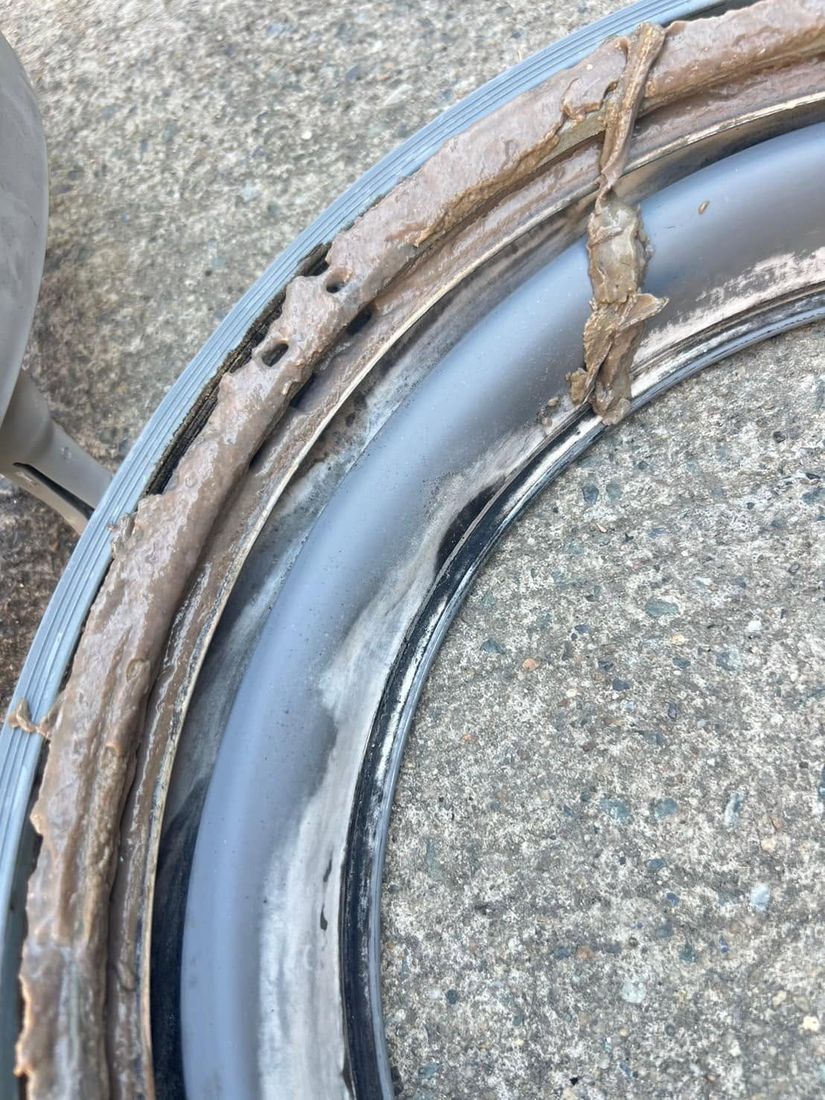
If you have had a front-loading washing machine for a while and fold back the rubber gasket around the door, there is a good chance you will find small black spots scattered in the fold. On some machines they form long streaks; on others there is brown slime all the way round. This is the most common problem with this type of machine, and it does not mean you have been neglecting it.
What I would like you to understand from the start, though, is that there are two very different kinds of marks on a gasket. One kind wipes off. The other will never look the way it did, whatever you do. Knowing which one you are dealing with saves you time and keeps you from damaging the gasket.
Why the gasket is the first place mould grows
The door gasket on a front loader is not a flat strip. It folds into a deep channel so it can stop water escaping through the door. The side effect of that design is that after every wash, water always sits in the bottom of the fold, together with lint, hair and detergent residue carried in with the water.
Shut the door straight after a wash and that fold stays dark, warm and damp the whole time, which is all three conditions mould needs. The black spots you see are mould colonies that have grown large enough to see with the naked eye.
Cleaning it yourself, the right way
- 1
Gently fold back the gasket and check all the way round
Pull the gasket towards you gently with your fingers and work your way round. The dirtiest part is usually at the bottom, around the six o'clock position, because that is where the water collects. Do not prise it with a screwdriver or anything hard: once the rubber tears, the whole gasket has to be replaced.
- 2
Pick out the lint and hair first
Clear out any debris sitting in the fold before you wipe. Wiping over it tends to smear the grime around rather than remove it.
- 3
Wipe with a cloth dipped in warm water and washing-up liquid
Always start with the gentlest method. Fresh grime that is still slimy usually comes off with this step alone. If it does, there is no need to go on to the next step.
- 4
If it will not shift, lay a soaked cloth on it and leave it
Soak a cloth or a thick wad of tissue in a household disinfectant and tuck it into the fold for about ten to fifteen minutes to give the product time to work, then wipe it away. Leaving it to soak works much better than scrubbing over and over.
- 5
Wipe down with clean water, then dry it
Make sure you remove all the cleaning product, because any chemical left in the fold will touch your clothes on the next wash. Drying the gasket is the step people most often skip, yet it is the step that stops the problem coming back.
Where removable grime ends and embedded mould begins
Once you have gone through all the steps, look at the result to see which kind you have. This is the point I most want us to agree on, because I end up explaining it to customers on almost every front-loader job I go to.
- What you seeBrown or grey slime that comes off on the cloth
- What it means
- Surface grime, not yet embedded
- What can be achieved
- Can be wiped off almost completely
- What you seeSmall black spots that fade when wiped
- What it means
- Starting to sink into the outer surface
- What can be achieved
- Can fade a lot, but a shadow may remain
- What you seeBlack spots that do not fade at all when wiped
- What it means
- Embedded in the rubber
- What can be achieved
- Cannot be made to look new
- What you seeRubber that is hard and brittle, with fine cracks
- What it means
- The rubber has deteriorated
- What can be achieved
- A matter of replacing the part
| What you see | What it means | What can be achieved |
|---|---|---|
| Brown or grey slime that comes off on the cloth | Surface grime, not yet embedded | Can be wiped off almost completely |
| Small black spots that fade when wiped | Starting to sink into the outer surface | Can fade a lot, but a shadow may remain |
| Black spots that do not fade at all when wiped | Embedded in the rubber | Cannot be made to look new |
| Rubber that is hard and brittle, with fine cracks | The rubber has deteriorated | A matter of replacing the part |
When the mould has sunk deep into the rubber, I tell you honestly that it cannot be made to look new again, and I do not recommend scrubbing harder to get it out. All that achieves is a torn gasket, which turns a cosmetic problem into a leak. The good news is that embedded black spots do not give off nearly as much smell as fresh slime. If the slimy part is removed completely, the smell usually goes, even though the black spots are still visible.
The gasket is clean, but the smell is still there
That tells you the gasket is not the only source. A front loader has two other places that collect far more grime than the gasket, and both sit behind parts that have to be removed first.
- The outer tub that holds the water, especially around the heater at the bottom of the tub, where limescale builds up thickest
- The outside of the stainless steel inner drum, a hidden gap between the drums where drum-cleaning solution flows past but has no scrubbing force to remove firmly stuck grime
- The drain pump filter in the lower front corner. You can open this yourself, so always check it first
- The drain hose and pipework, where sticky buildup inside causes smells to travel back up
Reaching the first two means taking off the front panel and the gasket assembly before the outer tub can be lifted out. That is why cleaning a front loader costs more than a top loader: from 1,299 THB, compared with from 999 THB for a top loader depending on capacity. It takes about three hours per machine.
How to stop it coming back
- Leave the door open after each wash so the gasket fold can dry, instead of shutting it straight away
- Wipe the gasket fold with a dry cloth once a week; it takes less than a minute
- Take the laundry out as soon as the wash finishes rather than leaving it overnight
- Use the amount of detergent stated on the pack. Whatever does not dissolve settles in the gasket fold and feeds the mould
- Run the drum-clean cycle from your machine's manual about once a month (some brands, such as Samsung, remind you every 40 washes)
- Clean the drain pump filter in the lower front corner at least once a month, as manufacturers recommend
If you have wiped it and are not sure whether what is left is grime or embedded mould, send me a photo of the gasket fold on LINE. I will take a look first and tell you honestly how much better it will get with a clean. Call +66 65 365 7673 or LINE @794xvrnm.