One of the questions I get most often is whether aircon cleaning is something you can do yourself or whether you need to call a technician every time. My honest answer is that you can do part of it yourself, and I encourage you to do that part, because it genuinely keeps the unit in good condition between thorough cleans. Advice at either extreme, never touch the unit at all or do it all yourself with no technician needed, is wrong. The right line sits in the middle, and it is clearer than many people think.
The rule I use to draw that line is simple. Any part the manufacturer designed to be removed by hand, you can take out and look after yourself. Any job that needs a screwdriver, water pressure, contact with wiring or handling refrigerant should be done by a technician. Below I set out both sides.
5 things you can do yourself, and should
None of these five needs any special tools, and together they take less than half an hour. Done regularly, they reduce how fast the unit clogs by a noticeable amount, especially during Chiang Mai's smoke haze season, when more dust gets into the unit than in other seasons.
- 1
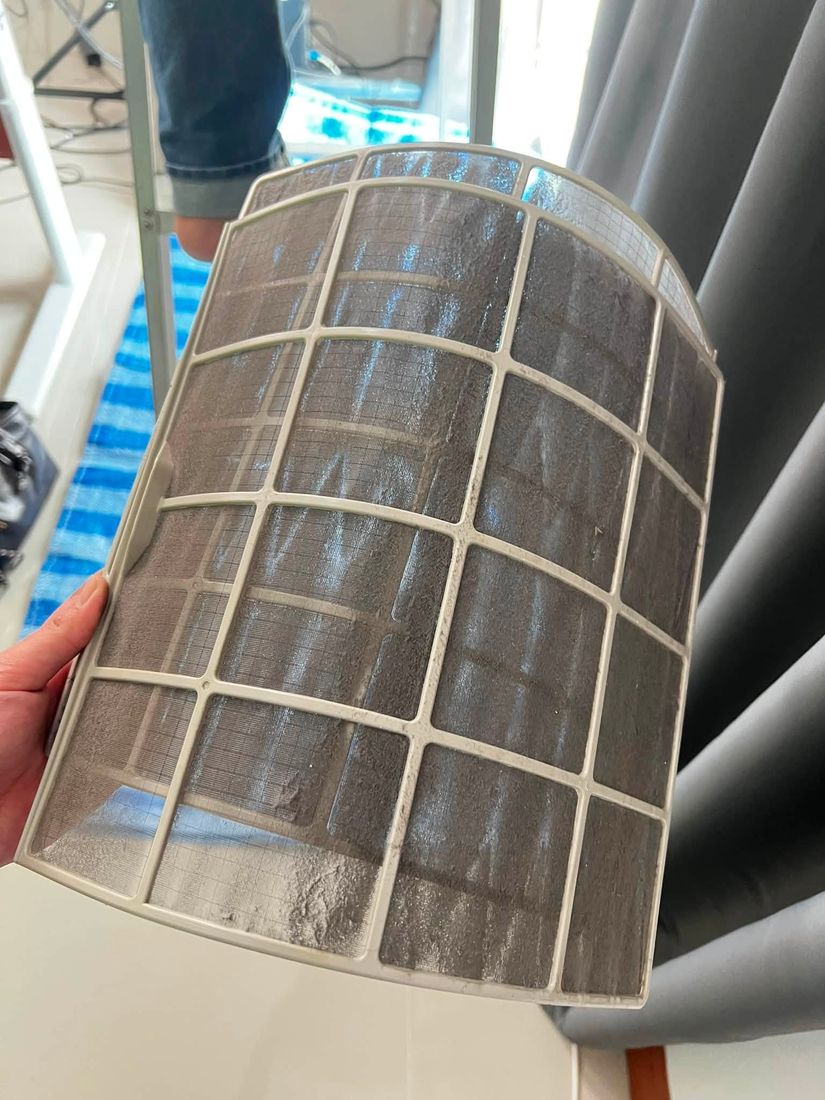
Wash the air filters
Of all the jobs, this gives the best return, because the filter is the first line of defence keeping dust off the coil. I recommend every 2 weeks as manufacturers recommend, and no longer than 4 weeks in the smoke haze season, and at least once a month in other seasons, as Thailand's Department of Health recommends.
- 2
Wipe the front cover and the air outlet
Use a damp, well-wrung cloth to wipe the outside of the front cover and the louvres as far as your hand can reach, because dust on these parts is blown back into the room every time the unit is switched on.
- 3
Vacuum around the unit and the wall above it
Dust on top of the unit and on the wall above the aircon is drawn into the return air inlet all the time. A gentle once-a-month pass with a brush attachment on the vacuum cleaner works better than many people expect.
- 4
Keep the area around the outdoor unit clear
The outdoor unit is the part installed outside the building, and it has to shed heat. If leaves, plant pots, covers or other items are blocking it, move them so there is open space all around. Leaves stuck to the grille can be picked off by hand.
- 5
Watch for and note anything unusual
Has the airflow weakened? Is there a smell when you switch it on? Is water dripping anywhere? Has the sound changed? Note it down and tell me when you book. It helps me pin down the cause faster and cuts the time I spend at your home.
Washing the filters properly: follow these steps in order
Many homes already wash their filters regularly, but small details are often missed, which means the job is not fully effective, or it ends up creating conditions for mould to grow instead. The right order is as follows.
- 1Switch off with the remote, then switch off the aircon's circuit breaker. Do not remove anything while the unit still has power.
- 2Lift the front cover slowly all the way up. Most aircons have a catch that holds the cover open, so there is no need to push it.
- 3Pull the filter straight down. If it feels stuck, look for a catch first. Do not prise it out, because the plastic is brittle and breaks easily.
- 4Tap the loose dust off into a bin first, then wash the filter, so the dust does not block the drain in your bathroom.
- 5Spray water from the back through to the front, against the direction the dust went in. If there is a greasy film, you can add a little diluted washing-up liquid.
- 6Shake the water off and leave it to dry in an airy, shaded spot. Do not dry it in strong sun, because the plastic warps and will not fit back in.
- 7Only put it back once it is completely dry. Press it in until every catch clicks, close the cover, and then switch the breaker back on.
4 things that damage the aircon when you do them yourself
These four are damage I see again and again on jobs at homes where the owners have done a full clean themselves, and each one costs many times more to repair than a clean. That is why I think it is worth telling you in advance.
1. Spraying water on the indoor coil yourself
Cleaning the indoor coil needs controlled water pressure: strong enough to push the grime out from between the fins, but not so strong that the aluminium fins fold over. Folded fins block the airflow and reduce cooling capacity. A technician then has to straighten them row by row with a fin comb, and from the jobs I take, they rarely end up as flat as before. Another point that is often overlooked: without a water-catching bag covering the whole unit, all the dirty water runs down the wall and onto the furniture.
2. Cleaning without cutting the power, or letting water into the circuit board
The aircon's control board sits on the right-hand side of the unit under a cover, which is the easiest place for water to get in if you spray without waterproofing it. A circuit board that gets wet often does not fail straight away, but shows problems the next time power is applied, and this part is expensive compared with the cost of a clean. That is why I switch off the breaker and wrap the circuit board before I start.
3. Topping up or releasing refrigerant yourself
Refrigerant is in a closed, pressurised system, so it does not normally go down by itself. If it is found to be low, the system has a leak. Topping up without finding the leak first means paying for refrigerant that will leak out again. Overfilling is also no less harmful than running short, because the high-side pressure goes over the limit and puts a heavy load on the compressor. And most important of all, refrigerant that touches the skin can cause cold burns instantly.
4. Taking out the blower wheel to clean it yourself
The blower wheel is the long cylindrical part with small blades all round it that draws air across the coil, and it is where mould and grime build up most thickly in the unit. But removing it means loosening a shaft locking screw deep inside, and refitting it means centring it exactly. If the shaft is even slightly off, there will be constant scraping noise and vibration, and the motor carries an uneven load that wears its bushings out early. This is why removing the blower wheel is the heart of the Premium Full Wash, and a job I do not recommend doing yourself.
Summary table: which jobs you can do and which need a technician
- JobWashing the air filters
- Can you do it yourself?
- Yes
- Why
- Designed to be removed by hand; no electrics or pressure involved
- JobWiping the front cover and louvres
- Can you do it yourself?
- Yes
- Why
- Outer plastic parts, safe to wipe with a damp cloth
- JobClearing leaves and moving items around the outdoor unit
- Can you do it yourself?
- Yes
- Why
- Clears space for heat to escape without touching the unit itself
- JobWashing the indoor coil with water
- Can you do it yourself?
- No
- Why
- Needs controlled water pressure, and the whole unit must be waterproofed first
- JobWashing the outdoor coil with water
- Can you do it yourself?
- No
- Why
- The fins fold easily, and there are electrical points and a capacitor inside the unit
- JobRemoving the whole front panel assembly
- Can you do it yourself?
- Not recommended
- Why
- The catches are hidden and brittle, and once broken, parts are hard to find for many models
- JobRemoving the blower wheel
- Can you do it yourself?
- No
- Why
- The shaft locking screw has to be loosened and the wheel refitted dead centre; if it is off, the motor is damaged
- JobChecking and topping up refrigerant
- Can you do it yourself?
- No
- Why
- A pressurised system that needs gauges, and overfilling is as harmful as running short
- JobChecking current, replacing the capacitor
- Can you do it yourself?
- No
- Why
- Direct electrical work; a capacitor holds its charge even after the power is cut
- JobClearing a blocked drain line
- Can you do it yourself?
- No
- Why
- Needs air or a pump pushing from the right direction; push the wrong way and water backs up into the unit
| Job | Can you do it yourself? | Why |
|---|---|---|
| Washing the air filters | Yes | Designed to be removed by hand; no electrics or pressure involved |
| Wiping the front cover and louvres | Yes | Outer plastic parts, safe to wipe with a damp cloth |
| Clearing leaves and moving items around the outdoor unit | Yes | Clears space for heat to escape without touching the unit itself |
| Washing the indoor coil with water | No | Needs controlled water pressure, and the whole unit must be waterproofed first |
| Washing the outdoor coil with water | No | The fins fold easily, and there are electrical points and a capacitor inside the unit |
| Removing the whole front panel assembly | Not recommended | The catches are hidden and brittle, and once broken, parts are hard to find for many models |
| Removing the blower wheel | No | The shaft locking screw has to be loosened and the wheel refitted dead centre; if it is off, the motor is damaged |
| Checking and topping up refrigerant | No | A pressurised system that needs gauges, and overfilling is as harmful as running short |
| Checking current, replacing the capacitor | No | Direct electrical work; a capacitor holds its charge even after the power is cut |
| Clearing a blocked drain line | No | Needs air or a pump pushing from the right direction; push the wrong way and water backs up into the unit |
Why jobs that use water pressure need a technician
Many people think cleaning an aircon means spraying water on the coil, but that is only part of the job. In practice, three things have to happen together. First, keeping water out of places it should not go. Second, using pressure that suits how thick the grime is. Third, collecting all the dirty water and taking it away without soiling your home.
The third part is the one home owners most often underestimate. Water coming off a coil that has not been cleaned for a year is black or dark brown, mixed with soot and biological grime. Without a water-catching bag round the unit and a sheet laid under the work area, it runs down the wall, the bed headboard and wooden floors, and is hard to clean off. That is why I lay a double-layer protective sheet on every job and tidy the area before I finish.
How much does cleaning it yourself actually save?
To give you a clear picture in numbers: a standard clean for a 9,000–18,000 BTU aircon is 500 THB per unit, or 450 THB each for three or more units in one visit. An ordinary home has its aircons cleaned twice a year, so the cost of looking after one unit comes to around 1,000 THB a year.
Compare that with the risks: coil fins folded over that have to be combed straight row by row and rarely end up as flat as before, a circuit board damaged by water, and a motor ruined because the blower wheel was not refitted dead centre. In all three cases the parts plus labour cost many times more than a whole year of cleaning. The conclusion is that washing the filters yourself is very good value, because there is almost no risk, while cleaning the coil yourself is not worth it once you weigh up the damage it could cause.
Summary
- The jobs you can do yourself, and that I recommend, are washing the filters, wiping the front cover, vacuuming round the unit, keeping the area round the outdoor unit clear, and noting anything unusual.
- When washing the filters, cut the power first, spray against the direction of the dust, and let them dry completely before refitting.
- Do not spray water on the coil yourself, especially with a car pressure washer, because folded fins have to be straightened row by row and rarely end up as flat as before.
- Do not top up refrigerant yourself, because low refrigerant means there is a leak, and the leak must be found before topping up.
- Do not remove the blower wheel yourself, because refitting it off centre damages the motor.
- The work you do yourself genuinely stretches the time between cleans, but it does not replace a thorough clean twice a year.
If you have washed the filters yourself and the aircon still does not cool as it used to, or still has a smell, the cause lies deeper than the parts you can look after yourself. Tell me the symptoms on LINE or by phone. I will give you a first assessment of the likely cause and which kind of clean to choose, and there is no charge for asking.