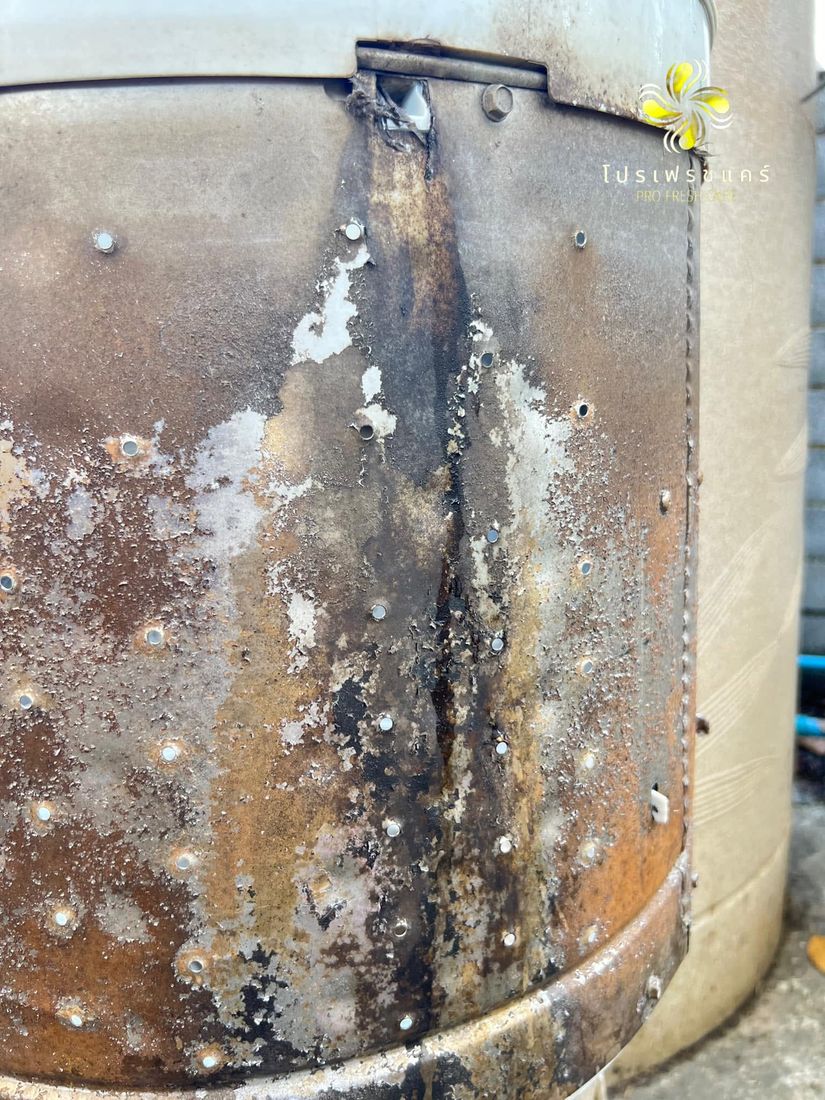
I get asked this about as often as I get asked about prices. The answer is yes, you can clean it yourself, and you can cover more than many people think. There are several spots you can do right away without any special tools, and doing them regularly really does stretch the time before you need to call a technician.
But there are also spots you cannot do yourself. Not because they are difficult, but because the residue sits behind parts that have to be removed first. So looking after a washing machine involves parts you can do yourself, and parts that can only be reached by taking the machine apart.
What you can do yourself, and should do regularly
The following four spots can all be reached from outside, without undoing any screws or lifting the machine. Together they take less than twenty minutes.
- 1
The lint filter
On a top loader it is usually a mesh screen or bag hanging inside the drum. Pull it out, rinse it and put it straight back. On a front loader it is a small screw cap in the lower front corner. Before opening it, put down a cloth and a shallow tray, because there is always some water left inside. Do this every one to two weeks.
- 2
The detergent and fabric softener drawer
Most drawers pull out completely for washing. The spot people tend to forget is the ceiling of the slot the drawer sits in, which often has sticky residue on it and is a spot where mould is commonly found. An old toothbrush will brush it off.
- 3
The door seal on a front loader
Gently pull back the rubber seal and wipe the inner groove with a damp cloth. Water and lint are left there after every wash, and if left alone they turn into black spots that are hard to remove. Wiping once a week is enough.
- 4
The drum-clean cycle from your machine's manual
Many newer models come with a Tub Clean or Drum Clean programme. Use it with a drum cleaning solution or cleaning tablets only on models whose manual allows them, because some brands, such as Samsung, say to run this cycle without any cleaning agent. About once a month is a suitable frequency (Samsung reminds you every 40 washes), and it helps keep surfaces that are still clean that way.
What you cannot do yourself, and why
A washing machine has two drums, one inside the other. The inner one is the drum with holes that you put your laundry into; the outer one is a solid tub that holds the water. Most of the detergent residue and mould is not in the drum you can see. It is on the outside of the inner drum and the inner wall of the outer tub, in the gap between the two, which there is no way to reach with a hand or a brush from above.
- The outside of the inner drum: this is a hidden gap between the drums; drum cleaner flows past but has no scrubbing force to remove firmly stuck grime. The drum has to be lifted out before it can be scrubbed.
- Under the wash plate of a top loader: a narrow space where the water does not swirl fast enough to wash the residue away. The wash plate has to be removed from the shaft.
- Around the heater in the outer tub of a front loader: the spot where limescale builds up thickest. The front panel and the door seal assembly have to come off first.
- The drain pipe and drain hose: sticky residue blocking the inside makes water drain slowly and sends smells back up.
To be clear: once residue has hardened into a layer, water flowing past without any scrubbing cannot wash it off, however many bottles of cleaner you pour in. Only mechanical scrubbing works. That is the one reason strip-down cleaning exists.
So can you take it apart yourself?
Yes, you can. No licence is needed for this. But before you decide, I recommend thinking about these three points.
- A strip-down clean of one machine takes about 3 hours, most of it spent scrubbing piece by piece rather than undoing screws.
- You need space to lay out the removed parts and hose them down. A condo unit with no work area cannot manage this.
- The real risk is reassembly. If a seal or rubber gasket is not seated properly, you only find out once water leaks out, and a washing machine that is not level will shake until it walks out of position.
The line I use when answering customers
- AreaLint filter
- Can you do it yourself?
- Yes, no tools needed
- Recommended frequency
- Every 1–2 weeks
- AreaDetergent drawer
- Can you do it yourself?
- Yes, pull the drawer out to wash it
- Recommended frequency
- Once a month
- AreaFront loader door seal
- Can you do it yourself?
- Yes, wipe the inner groove
- Recommended frequency
- Once a week
- AreaVisible inside surface of the drum
- Can you do it yourself?
- Partly, with the drum-clean cycle
- Recommended frequency
- Once a month
- AreaOutside of the inner drum
- Can you do it yourself?
- No, the drum has to be lifted out
- Recommended frequency
- At each strip-down clean
- AreaUnder the wash plate and the drum base
- Can you do it yourself?
- No, the wash plate has to be removed
- Recommended frequency
- At each strip-down clean
- AreaAround the heater in the outer tub
- Can you do it yourself?
- No, the front panel has to be removed
- Recommended frequency
- At each strip-down clean
- AreaDrain pipe and hose
- Can you do it yourself?
- Not in practice
- Recommended frequency
- At each strip-down clean
| Area | Can you do it yourself? | Recommended frequency |
|---|---|---|
| Lint filter | Yes, no tools needed | Every 1–2 weeks |
| Detergent drawer | Yes, pull the drawer out to wash it | Once a month |
| Front loader door seal | Yes, wipe the inner groove | Once a week |
| Visible inside surface of the drum | Partly, with the drum-clean cycle | Once a month |
| Outside of the inner drum | No, the drum has to be lifted out | At each strip-down clean |
| Under the wash plate and the drum base | No, the wash plate has to be removed | At each strip-down clean |
| Around the heater in the outer tub | No, the front panel has to be removed | At each strip-down clean |
| Drain pipe and hose | Not in practice | At each strip-down clean |
In short: if there is no smell yet and you are already looking after the four spots above, carry on doing it yourself. There is no need to call a technician yet. But if you open the machine when it is completely dry and still smell mustiness, or brown flakes of residue come off onto your laundry, that residue is from the side you cannot reach, and there is no do-it-yourself method that fixes it.
Prices if you choose to have me do it
- Machine typeTop loader, capacity up to 15 kg
- Price
- 999 THB
- Machine typeTop loader, capacity 15.1–19 kg
- Price
- 1,200 THB
- Machine typeTop loader, capacity over 19 kg
- Price
- 1,500 THB
- Machine typeFront loader
- Price
- From 1,299 THB
- Machine typeIf the machine has to be taken away to be cleaned off site
- Price
- Add 500 THB
| Machine type | Price |
|---|---|
| Top loader, capacity up to 15 kg | 999 THB |
| Top loader, capacity 15.1–19 kg | 1,200 THB |
| Top loader, capacity over 19 kg | 1,500 THB |
| Front loader | From 1,299 THB |
| If the machine has to be taken away to be cleaned off site | Add 500 THB |
These prices cover every step of the clean, with no other charges added later, and the work I do carries a 30-day warranty.
Not sure whether your machine is already beyond what you can do yourself? Send photos of the inside of the drum and the rubber seal on LINE and I will assess it first, free of charge. Call +66 65 365 7673 or LINE @794xvrnm.