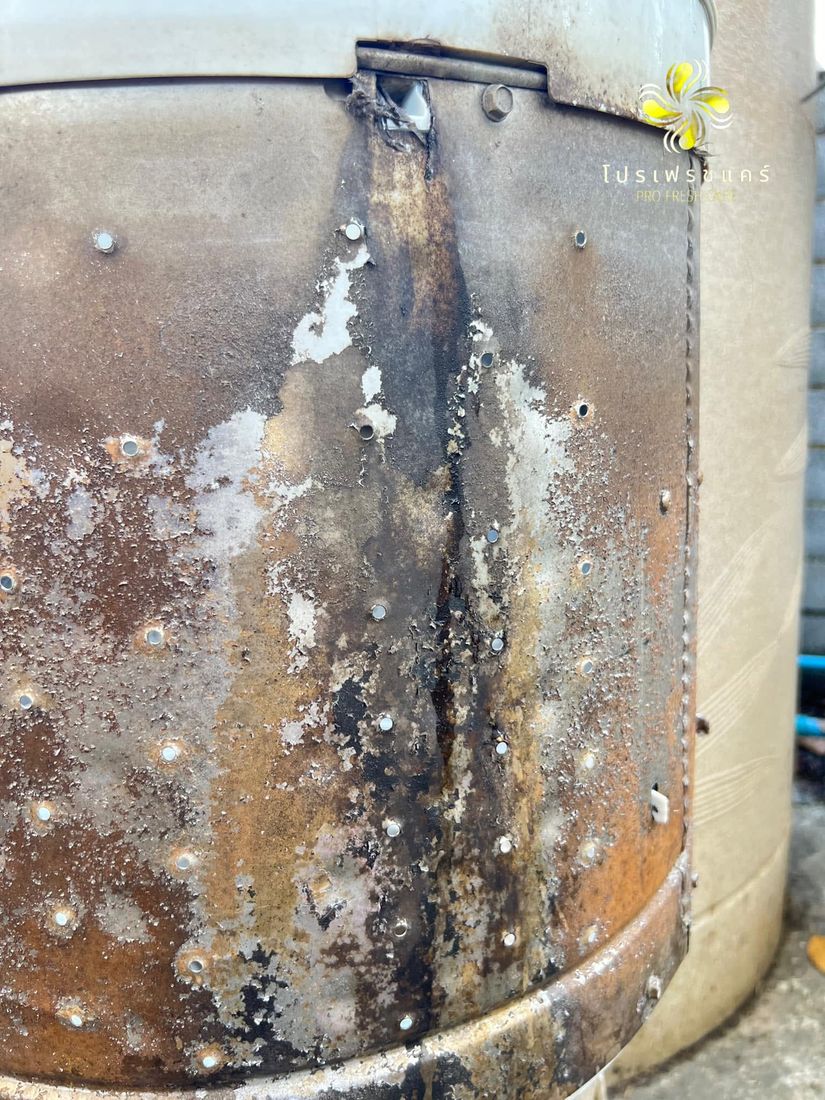
The washing machine problem customers contact me about most often is laundry that still smells musty after it has been washed. Some have already switched detergent brands, added more fabric softener or washed a second time, and the smell is still there. The point is that the smell is not coming from the clothes. It is coming from the machine itself.
This can be explained by how the drum is built, and once you know that, you immediately understand why the usual fixes do not work.
The drum has two layers, and residue builds up between them
A washing machine does not have just one drum, but two, one inside the other. The inner one is the perforated drum you put your laundry into; the outer one is a solid tub that holds the water. The whole time the machine runs, water and detergent flow through the holes in the inner drum into the gap between the two.
Undissolved detergent, fabric softener and lint are left clinging to the outside of the inner drum, a place you cannot see at all when you open the lid and look down from above. Add the moisture left behind after each wash, and this spot becomes an environment well suited to the growth of mould and bacteria.
Why pouring in drum cleaner and running a cycle is not enough
The drum cleaners sold in shops are useful for routine care, but they have limits worth understanding. This kind of cleaner works by dissolving in water, with the machine spinning so the water touches the drum surface. What it can do is wash off residue that has not yet hardened on smooth surfaces.
- Once residue has hardened into a layer, water flowing past without any scrubbing cannot wash it off. It takes mechanical scrubbing.
- Residue under the wash plate and in the crevices of the drum base sits in dead spots where the swirling water does not reach with enough speed.
- Residue on the outside of the inner drum is on the opposite side from where the cleaner makes contact.
- Mould embedded in rubber grooves and plastic crevices has to be reached with a brush before it will come out.
In short, drum cleaner is suited to keeping an already clean machine clean, but it is not the tool for rescuing a machine that has been building up residue for years.
A basic check you can do yourself: is it time for a strip-down clean?
- 1
Smell the drum when the machine is completely dry
Open a machine that has not been used for at least a day and smell inside the drum. If you notice a musty or sour smell even with no laundry inside, the residue has built up to the point where it is having an effect.
- 2
Look for black marks on the rubber seal and under the lid
On a front loader, look in the groove of the rubber seal around the door. On a top loader, look under the rim of the lid and around the mouth of the drum. Small black spots scattered around are the visible part of the mould, and they usually mean there is more inside than you can see.
- 3
Run one load of white laundry without detergent
If brown or black flakes of residue come off onto the laundry, the residue inside has started to peel away. This is a clear sign that the machine should have a strip-down clean.
- 4
Count how long it has been
If the machine has been used for more than a year without ever being stripped down and cleaned, and your household washes every day or has baby clothes, it is worth having the inside checked once, even if there is no smell yet.
How a strip-down clean differs from pouring in cleaner and spinning
- AreaInside surface of the inner drum
- Drum cleaner
- Can wash off residue that has not hardened
- Full strip-down clean
- Can scrub it all off
- AreaOutside surface of the inner drum
- Drum cleaner
- Cannot reach
- Full strip-down clean
- Taken out and scrubbed directly
- AreaUnder the wash plate and the drum base
- Drum cleaner
- Cannot reach
- Full strip-down clean
- Wash plate removed and scrubbed
- AreaOuter tub that holds the water
- Drum cleaner
- Partly reached
- Full strip-down clean
- Whole tub can be cleaned
- AreaDrain pipe and hose
- Drum cleaner
- Not covered
- Full strip-down clean
- Cleaned and checked for blockages
- AreaRubber seals and plastic crevices
- Drum cleaner
- Not covered
- Full strip-down clean
- Can be scrubbed with a brush
| Area | Drum cleaner | Full strip-down clean |
|---|---|---|
| Inside surface of the inner drum | Can wash off residue that has not hardened | Can scrub it all off |
| Outside surface of the inner drum | Cannot reach | Taken out and scrubbed directly |
| Under the wash plate and the drum base | Cannot reach | Wash plate removed and scrubbed |
| Outer tub that holds the water | Partly reached | Whole tub can be cleaned |
| Drain pipe and hose | Not covered | Cleaned and checked for blockages |
| Rubber seals and plastic crevices | Not covered | Can be scrubbed with a brush |
In practice, one strip-down clean takes about 3 hours per machine, because the parts have to be taken off and cleaned one by one, then reassembled, with the machine levelled and tested before it is handed back.
Limits of a strip-down clean you should know before starting
A strip-down clean comes with a few conditions that are worth knowing from the start, so I explain them before you decide.
- If there is limescale or rust built up over a long time from the water and detergent, parts in that area may be damaged during removal. This falls outside the warranty, and I will show you before I take anything apart.
- Mould that has sunk deep into the rubber of the seal cannot be made like new again, because scrubbing too hard tears the seal.
- If there is not enough space on site to take the parts off and hose them down, for example in a condo unit with no work area, the machine has to be taken away to be cleaned off site, which costs an extra 500 THB.
- My scope of work is cleaning. If I find that an internal part was already faulty, I tell you what I see before starting, and you decide whether to go ahead with the clean or take it to the brand's service centre first.
Washing machine cleaning prices in Chiang Mai
The price depends on the type of machine and its capacity. Front loaders are more complicated to take apart and reassemble than top loaders, so they are charged at a different rate.
- Machine typeTop loader, capacity up to 15 kg
- Price
- 999 THB
- Machine typeTop loader, capacity 15.1–19 kg
- Price
- 1,200 THB
- Machine typeTop loader, capacity over 19 kg
- Price
- 1,500 THB
- Machine typeFront loader
- Price
- From 1,299 THB
- Machine typeIf the machine has to be taken away to be cleaned off site
- Price
- Add 500 THB
| Machine type | Price |
|---|---|
| Top loader, capacity up to 15 kg | 999 THB |
| Top loader, capacity 15.1–19 kg | 1,200 THB |
| Top loader, capacity over 19 kg | 1,500 THB |
| Front loader | From 1,299 THB |
| If the machine has to be taken away to be cleaned off site | Add 500 THB |
This price covers every step of the clean, with no other charges added later, and I always give you the full price before starting.
How to go longer between strip-down cleans
- Leave the lid open after a wash so the moisture can evaporate, rather than closing it straight away.
- Use the amount of detergent stated. Adding more leaves more undissolved detergent behind.
- If you use fabric softener regularly, run a hot wash or the drum-clean cycle from your machine's manual every so often.
- Take the laundry out as soon as the wash finishes, and do not leave it overnight.
- Clean the detergent drawer and the lint filter regularly.
If you are not sure whether your machine is due for a strip-down clean, send photos of the inside of the drum and the rubber seal on LINE, and I will give you an initial assessment before you decide. Call +66 65 365 7673 or LINE @794xvrnm.