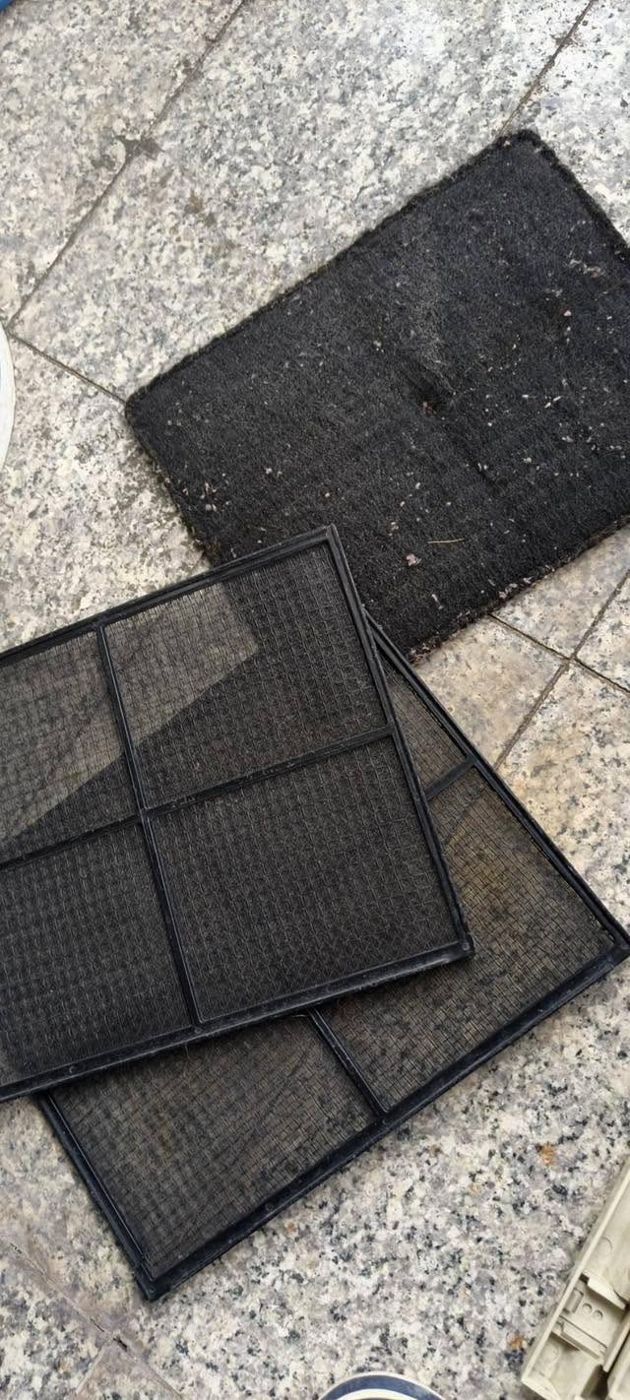
For anyone living in Chiang Mai, the weather from February to April is all too familiar. Visibility drops until you can no longer see Doi Suthep, and the dust readings in the apps stay in the red for weeks at a time. What most people do is close the doors and windows and run the aircon all day, which is the right approach. But there is a technical point that rarely gets mentioned: the aircon you are relying on builds up dirt much faster than usual, and once the coil clogs, its performance drops from mid-season.
Chiang Mai is different, because the dust has nowhere to go
Chiang Mai sits in a basin surrounded by mountains. In the dry season, a layer of warm air above traps the cooler air near the ground (a temperature inversion), a condition the Thai media call a lid over the city. As a result, smoke from burning in the area and in neighbouring countries cannot rise away, and it circulates in the city for weeks until the first rain arrives.
Compared with Bangkok, where the dust comes mainly from traffic and disperses more easily, the dust in Chiang Mai at this time is more concentrated and lingers longer. For an aircon that constantly draws room air back over the indoor coil, this means the amount of dust passing through the filter each day is clearly higher than in other seasons. In the jobs I take after the smoke haze season, most homes' coils have a clearly visible build-up of soot.
Can a home aircon filter PM2.5?
The technically accurate answer is that the standard filter that comes with an aircon cannot filter PM2.5. It is designed to catch coarse dust, hair and pet fur to stop the indoor coil clogging, not to filter particles of 2.5 microns. If you have been told that running the aircon automatically keeps you safe from PM2.5, that information is not accurate.
Even so, the aircon plays an indirect role that matters more than many people think, because running it means keeping the doors and windows closed, which cuts off the main way dust gets in from outside. The Department of Disease Control's dust-free room guidance itself lists running a fan or aircon as one of the steps, because it helps circulate the air inside a sealed room.
- EquipmentThe filter that comes with the aircon
- Filters PM2.5?
- No
- Its real role
- Catches coarse dust, stops the indoor coil clogging
- EquipmentAdd-on fine filter
- Filters PM2.5?
- Partly
- Its real role
- Must be chosen to suit the model, otherwise the aircon has to work harder
- EquipmentHEPA air purifier
- Filters PM2.5?
- Yes
- Its real role
- The main equipment for filtering PM2.5 in the room
- EquipmentSealed room + aircon running
- Filters PM2.5?
- Indirectly
- Its real role
- Cuts off the way outside dust gets in, which matters most
| Equipment | Filters PM2.5? | Its real role |
|---|---|---|
| The filter that comes with the aircon | No | Catches coarse dust, stops the indoor coil clogging |
| Add-on fine filter | Partly | Must be chosen to suit the model, otherwise the aircon has to work harder |
| HEPA air purifier | Yes | The main equipment for filtering PM2.5 in the room |
| Sealed room + aircon running | Indirectly | Cuts off the way outside dust gets in, which matters most |
What happens to your aircon during the smoke haze season
Although the standard filter does not catch PM2.5, smoke from burning also carries coarse dust, soot and ash, which stick very readily to the filter and the indoor coil fins. As they build up, less air passes through the coil, and the following happens.
- The aircon cools more slowly, until you keep setting the temperature lower to feel as cool as before.
- Electricity bills go up, because the compressor has to run longer each cycle.
- Soot on the coil becomes a breeding ground for mould once it gets damp, and a musty smell follows.
- If it clogs so much that not enough air gets through, ice can form on the coil and then melt and drip.
The usual standard cleaning interval is every 6 months, which is based on how fast dust builds up under normal use. But for homes in Chiang Mai that go through a full smoke haze season every year, the amount of soot passing over the coil each day is clearly higher than normal, so my assessment is that cleaning should be more frequent than this standard.
An aircon cleaning schedule that fits Chiang Mai's calendar
Rather than sticking rigidly to every 6 months, I recommend planning your aircon care around Chiang Mai's actual seasons, which works better in practice.
- PeriodJan – early Feb
- What to do
- Thorough clean before the smoke haze season
- Why
- Go into the season with a clean coil, while bookings are not yet busy
- PeriodFeb – Apr
- What to do
- Wash the filters yourself every 2 weeks as manufacturers recommend, and no longer than 4 weeks
- Why
- Dust is concentrated and filters clog much faster than usual
- PeriodMay – Jun
- What to do
- Second thorough clean
- Why
- Removes the soot built up over the season, before the very humid rainy season
- PeriodJul – Oct
- What to do
- Watch for smells and dripping
- Why
- High humidity makes mould grow fast; if a musty smell starts, go for a strip-down clean
- PeriodNov – Dec
- What to do
- A good time for repairs or installation
- Why
- Aircons are used less and bookings are light, so there is no long wait
| Period | What to do | Why |
|---|---|---|
| Jan – early Feb | Thorough clean before the smoke haze season | Go into the season with a clean coil, while bookings are not yet busy |
| Feb – Apr | Wash the filters yourself every 2 weeks as manufacturers recommend, and no longer than 4 weeks | Dust is concentrated and filters clog much faster than usual |
| May – Jun | Second thorough clean | Removes the soot built up over the season, before the very humid rainy season |
| Jul – Oct | Watch for smells and dripping | High humidity makes mould grow fast; if a musty smell starts, go for a strip-down clean |
| Nov – Dec | A good time for repairs or installation | Aircons are used less and bookings are light, so there is no long wait |
Is a standard clean enough, or do you need a strip-down clean?
With Chiang Mai's dust, the difference between the two kinds of cleaning matters more than elsewhere, because the place where soot and mould build up most is the blower wheel, the cylindrical part deep inside the unit that spins to move the air. Spraying water through the front of the unit cannot reach the inner grooves of the blower wheel at all.
- If the aircon is already cleaned regularly and has no smell, a standard clean is enough.
- If there is a musty or sour smell when you switch it on, mould has reached the blower wheel and you should choose a strip-down clean.
- If it has not been cleaned for more than a year, or has just been through a smoke haze season without cleaning, choose a strip-down clean.
- If anyone in the home has a dust allergy, or there are small children or elderly people, a strip-down clean is better value in the long run.
What it takes to make a dust-free room that works
Cleaning the aircon is only part of the job. If the room still has gaps where dust can get in, it is not enough however clean the aircon is. The rest you can do entirely yourself without calling a technician.
- 1
Choose one room as the main room
Usually the bedroom, because it is the room where you spend the longest unbroken stretch each day. There is no need to do the whole house.
- 2
Seal the gaps around frames and pipe holes
Use silicone or adhesive tape. The points most often overlooked are the aircon pipe hole through the wall and the gap under the door.
- 3
Have the aircon cleaned so the coil is clean
A clogged coil leaves too little air circulating in the room, and also releases mould spores back into the room you have sealed.
- 4
Put the air purifier in the right place
Place it in the middle of the room or near where you sleep, not against a wall or under furniture, where it cannot draw air from the whole room.
- 5
Wipe the floor with a damp cloth instead of sweeping
Sweeping stirs dust that has settled on the floor back up into the air.
Summary
- A standard aircon filter cannot filter PM2.5, but the aircon is still needed because it lets you keep the room closed.
- Chiang Mai's smoke haze season clogs filters and coils clearly faster than other seasons.
- Have a thorough clean before the season, in January, then wash the filters yourself every 2 weeks as manufacturers recommend, and no longer than 4 weeks during the season.
- Once a musty smell starts, it needs a strip-down clean, not a spray through the front cover.
- A dust-free room needs all three: a sealed room, a clean aircon and an air purifier.
If you would like me to assess how clogged the aircon at your home is and which kind of clean to choose before the smoke haze season, tell me the symptoms on LINE or by phone. I will give you a first assessment free of charge, and tell you honestly whether it is due for a clean or does not need one yet.